
Carrots are often promoted as a natural remedy for glowing and lighter skin. But can eating carrots actually whiten your skin – or is this just another beauty myth?
In this evidence-based guide, we’ll break down what carrots really do for your skin, how beta-carotene works, and what you can realistically expect.
Why Are Carrots Linked to Skin Brightening?
Carrots are rich in beta-carotene, a powerful antioxidant that converts into vitamin A (retinol) inside the body.
Vitamin A plays a key role in:
- Skin cell renewal
- Oil regulation
- Reducing clogged pores
- Supporting collagen production
Because of these benefits, many people assume carrots “whiten” the skin. But let’s clarify what that really means.
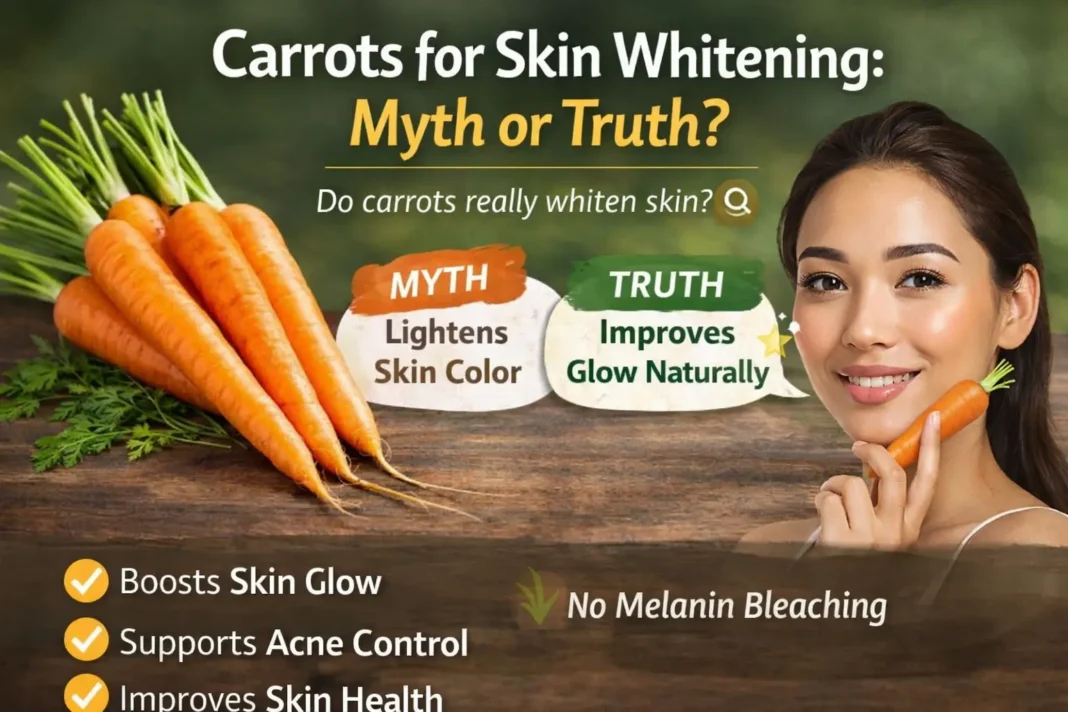
The Truth: Do Carrots Actually Whiten Skin?
❌ Myth: Carrots Change Your Natural Skin Color
Carrots do not permanently lighten your natural skin tone or alter melanin levels.
✅ Truth: Carrots Improve Skin Brightness and Glow
Regular consumption of carrots can:
- Improve overall skin clarity
- Reduce dullness
- Enhance natural glow
- Support even skin tone
The improvement comes from better skin health – not bleaching or whitening.
How Beta-Carotene Affects Skin Tone
When you consume carrots regularly:
- Beta-carotene accumulates slightly in the skin.
- It gives the skin a subtle warm, healthy glow.
- It protects against oxidative stress and sun damage.
In fact, studies show diets rich in carotenoids can enhance a golden glow, which many people perceive as healthier and more radiant — not lighter.
Can Eating Too Many Carrots Change Skin Color?
Yes — but not in the way you think.
Excessive carrot intake can cause a harmless condition called carotenemia, where skin appears slightly orange (especially on palms and soles). This is temporary and reversible.
Moderation is key.
Additional Skin Benefits of Carrots
Beyond the “whitening” debate, carrots offer real skincare benefits:
✔ Reduces Acne
Vitamin A helps regulate sebum production and prevents clogged pores.
✔ Fights Premature Aging
Antioxidants combat free radicals that cause wrinkles.
✔ Supports Sun Protection
Carotenoids help reduce UV-induced skin damage (though they do NOT replace sunscreen).
✔ Improves Skin Texture
Promotes smoother and healthier-looking skin over time.
How to Use Carrots for Best Skin Results
1. Eat Them Regularly
- 1 medium carrot per day is sufficient.
- Consume raw, steamed, or in juices.
2. Pair With Healthy Fats
Beta-carotene is fat-soluble. Eat carrots with:
- Olive oil
- Nuts
- Seeds
- Avocado
This improves absorption.
3. Avoid Extreme Juice Cleanses
Balanced nutrition works better than overconsumption.
What Actually Lightens Skin Tone?
If your goal is reducing pigmentation or dark spots, focus on:
- Vitamin C-rich foods
- Proper sunscreen use
- Adequate hydration
- Professional dermatological treatments if needed
Carrots support skin health, but they are not a skin-bleaching solution.
Frequently Asked Questions
Do carrots lighten dark spots?
Carrots may support skin repair and improve glow, but they don’t directly remove pigmentation.
How long does it take to see skin improvements?
Most dietary skin improvements take 4–8 weeks of consistent healthy eating.
Is carrot juice better than raw carrots?
Both are beneficial, but whole carrots provide fiber that supports gut health — which also impacts acne.
Can carrots help acne scars?
They support skin regeneration, which may gradually improve overall skin appearance.
Final Verdict: Myth or Truth?
Carrots do not whiten skin in the bleaching sense.
However, they can enhance natural glow, improve clarity, and support acne-free skin when included in a balanced diet.
Instead of chasing quick whitening fixes, focus on nourishing your skin from within. Healthy skin always looks brighter than artificially lightened skin.