

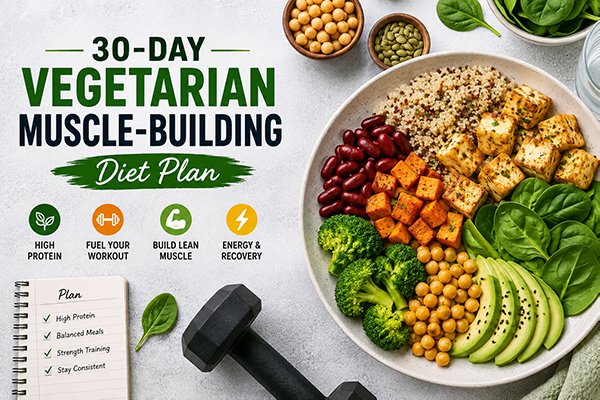
Building muscle on a vegetarian diet is absolutely possible. The key is not simply eating more vegetables ,it is getting enough protein, calories, carbohydrates, healthy fats, and micronutrients consistently while following a progressive strength-training routine.
A well-planned vegetarian diet can provide the nutrients needed for muscle growth, but meal quality and overall protein intake matter. This 30-day vegetarian muscle-building diet plan provides a practical framework for beginners and intermediate fitness enthusiasts who want to support lean muscle growth, strength, and recovery without relying on meat.
Important: Individual calorie and protein requirements vary based on body weight, age, activity level, training volume, and health status. If you have a medical condition or specific dietary requirements, consider speaking with a registered dietitian or qualified healthcare professional.
What Does It Take to Build Muscle?
Muscle growth occurs when resistance training provides a stimulus and your body has enough nutrients and recovery time to adapt.
Three fundamentals matter most:
- Progressive resistance training
Gradually increasing training difficulty helps stimulate muscle adaptation. - Adequate protein
Protein provides amino acids needed for muscle protein synthesis and repair. - Sufficient energy and recovery
Consistently eating too few calories can make it harder to gain muscle, even when protein intake is adequate.
For many people who strength train regularly, a daily protein intake around 1.6 grams per kilogram of body weight is a useful target. Individual needs can vary, so this should be treated as a practical starting point rather than a universal prescription.
Best Vegetarian Protein Sources for Muscle Building
Vegetarians have plenty of protein options. The trick is to include protein-rich foods throughout the day rather than depending on one meal.
High-Protein Vegetarian Foods
- Greek yogurt
- Cottage cheese (paneer)
- Milk
- Eggs, if included in your vegetarian diet
- Tofu
- Tempeh
- Soy chunks
- Lentils
- Chickpeas
- Kidney beans
- Black beans
- Peas
- Edamame
- Quinoa
- Seitan
- Nuts and seeds
Plant proteins can be combined across the day to provide a broad range of essential amino acids.
For example, rice with dal, whole-grain bread with beans, or yogurt with oats and seeds can create nutritious, protein-containing meals.
30-Day Vegetarian Muscle-Building Plan
Instead of following a rigid menu every day, use a flexible structure that can be adjusted according to your appetite, training schedule, and available foods.
Days 1–7: Build the Foundation
The first week focuses on establishing consistent eating habits.
Breakfast
Choose one:
- Oats + milk + banana + nuts
- Vegetable omelet + whole-grain toast
- Greek yogurt + oats + berries
- Paneer or tofu sandwich + fruit
Mid-Morning Snack
- Fruit + Greek yogurt
- Milk + handful of nuts
- Roasted chickpeas
Lunch
Build your plate with:
- Rice or whole-grain roti
- Dal or beans
- Paneer/tofu
- Mixed vegetables
- Salad
Pre-Workout
Choose an easily digested carbohydrate source:
- Banana
- Dates
- Toast with peanut butter
- Oatmeal
Post-Workout
Combine protein and carbohydrates:
- Milk + banana
- Greek yogurt + fruit
- Paneer/tofu with rice
- Protein shake, if needed to meet your protein target
Dinner
Try:
- Tofu stir-fry + rice
- Paneer + roti + vegetables
- Dal + rice + vegetables
- Chickpea curry + whole-grain roti
Days 8–14: Increase Protein Variety
During the second week, rotate your protein sources.
For example:
Monday: Dal + paneer
Tuesday: Tofu + chickpeas
Wednesday: Soy chunks + rice
Thursday: Greek yogurt + lentils
Friday: Paneer + beans
Saturday: Tofu + dal
Sunday: Chickpeas + yogurt
This approach prevents your diet from becoming repetitive while increasing your exposure to different nutrients.
Try to include a meaningful protein source at each main meal.
Days 15–21: Focus on Calories and Recovery
If your goal is muscle gain, eating enough total energy is important.
If your weight is not increasing and your strength is not progressing after several weeks, your food intake may be too low.
Healthy calorie-dense foods can help:
- Peanut butter
- Nuts
- Seeds
- Avocado
- Olive oil
- Whole grains
- Paneer
- Full-fat yogurt
- Milk
You don’t need to rely on junk food to increase calories.
A simple smoothie made with milk, oats, banana, peanut butter, and yogurt can provide carbohydrates, protein, and calories in a convenient form.
Days 22–30: Make the Plan Sustainable
The final nine days are about turning the diet into a long-term routine.
Rather than completely changing your meals every day, create a rotation of 5–7 breakfasts, lunches, dinners, and snacks that you enjoy.
For example:
Breakfast Rotation
- Oats + milk + fruit
- Paneer sandwich
- Greek yogurt bowl
- Eggs + toast
- Tofu scramble
Lunch Rotation
- Dal + rice + vegetables
- Rajma + rice
- Chickpea salad + roti
- Paneer bowl
- Tofu stir-fry
Dinner Rotation
- Paneer + vegetables + roti
- Tofu + rice
- Lentil curry + rice
- Soy chunks + roti
- Chickpea curry + vegetables
Consistency is more important than having a “perfect” muscle-building diet.
Best Fruits for a Muscle-Building Diet
Fruit provides carbohydrates, fiber, vitamins, minerals, and other beneficial plant compounds.
Good options include:
Bananas: Convenient source of carbohydrates and potassium.
Berries: Provide fiber and antioxidant compounds.
Oranges: Rich in vitamin C and hydrating.
Mango: A calorie- and carbohydrate-rich option when eaten in appropriate portions.
Apples: Convenient and fiber-rich.
Kiwi: Provides vitamin C and other nutrients.
Fruit doesn’t need to be avoided when building muscle. It can be especially useful around workouts when you want an easy source of carbohydrates.
Best Vegetables for Muscle Growth
Vegetables aren’t usually major protein sources, but they are important for overall diet quality.
Include a variety of:
- Spinach
- Broccoli
- Carrots
- Bell peppers
- Peas
- Cauliflower
- Tomatoes
- Green beans
- Sweet potatoes
- Leafy greens
Aim for variety rather than relying on one “superfood.”
Sample One-Day Vegetarian Muscle-Building Menu
Here’s a simple example of how everything can fit together:
Breakfast:
Oats with milk, banana, peanut butter and Greek yogurt
Snack:
Apple + handful of almonds
Lunch:
Rice, dal, paneer and mixed vegetables
Pre-workout:
Banana + toast
Post-workout:
Milk or protein shake + fruit
Dinner:
Tofu stir-fry, rice and vegetables
Before bed, if needed:
Greek yogurt or milk
Your exact portions should be adjusted according to your calorie and protein requirements.
Common Mistakes on a Vegetarian Muscle-Building Diet
1. Eating too little protein
A diet can be vegetarian and healthy while still being relatively low in protein. Include a protein-rich food at every major meal.
2. Relying mainly on vegetables
Vegetables are essential, but they shouldn’t replace protein-rich foods such as tofu, lentils, dairy, soy, beans, or eggs where appropriate.
3. Avoiding carbohydrates
Carbohydrates provide an important source of energy for resistance training. Rice, oats, potatoes, fruits, and whole grains can all fit into a muscle-building diet.
4. Changing the diet every few days
Muscle growth requires consistency. Give your training and nutrition enough time to work before constantly changing your approach.
5. Ignoring sleep and recovery
Training breaks down muscle tissue, while recovery supports adaptation. Aim for sufficient, consistent sleep and include rest or lighter training days.
Supplements: Are They Necessary?
Supplements are not required for everyone. A well-planned diet should come first.
However, some vegetarian athletes may need to pay particular attention to nutrients such as vitamin B12, iron, vitamin D, iodine, calcium, and omega-3 fatty acids, depending on their food choices and individual circumstances.
Protein powder can also be convenient if meeting daily protein requirements through food is difficult. It should be viewed as a convenient food supplement—not a replacement for a balanced diet.
Creatine monohydrate is another well-researched sports nutrition supplement that may help improve strength and training performance, particularly during resistance training. Anyone considering supplements should consider their individual circumstances and seek professional advice when appropriate.
Final Thoughts
A vegetarian diet can successfully support muscle growth when it provides enough protein, calories, carbohydrates, healthy fats, micronutrients, and overall food variety.
The most effective 30-day approach isn’t an extreme diet. Instead, build repeatable habits: eat protein-rich foods throughout the day, include fruits and vegetables, fuel your workouts with carbohydrates, progressively train your muscles, and prioritize recovery.
After 30 days, don’t simply stop. Keep the meals you enjoy, adjust portions according to your progress, and continue monitoring your strength, body weight, recovery, and overall performance.
Muscle building takes time, but a consistent nutrition and training routine can create the foundation for sustainable progress.