

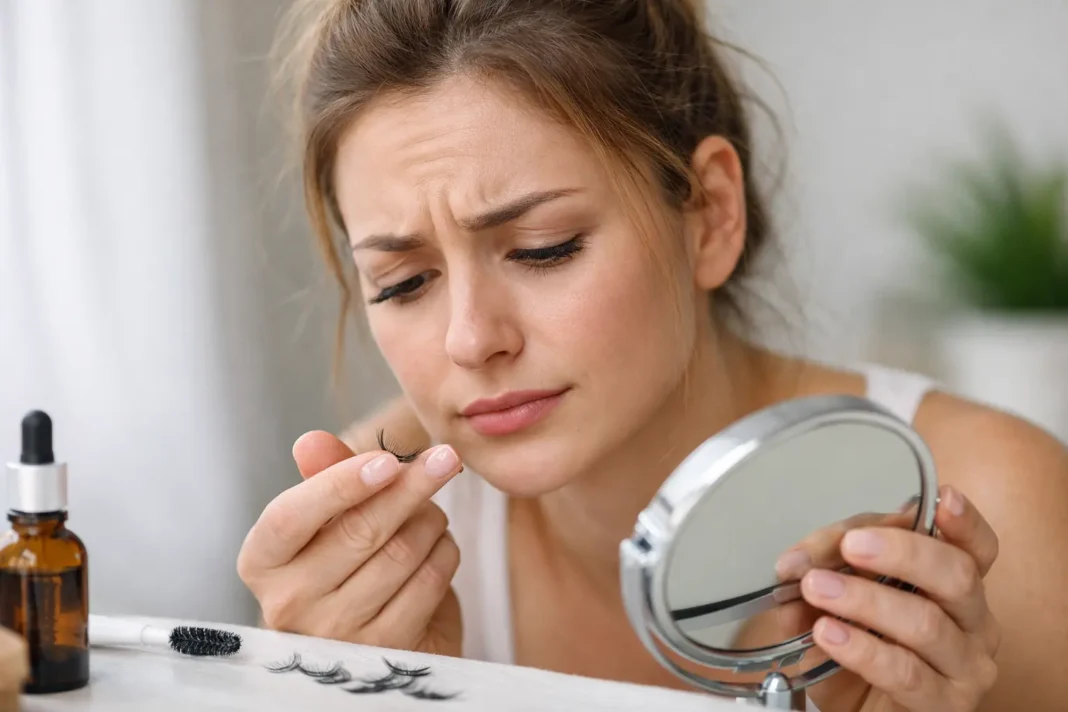
Have you ever looked in the mirror and noticed your lashes looking a bit… sparse? Seeing a stray eyelash on your cheek once in a while is perfectly normal (we lose about 1 to 5 natural lashes a day!), but when they start thinning rapidly, it’s natural to feel a bit concerned.
This condition is medically known as madarosis. While it can be frustrating, the good news is that most causes are manageable or temporary. In this guide, we’ll dive into the real reasons why eyelashes fall out and—more importantly—how you can help them grow back thicker and healthier.
1. Hard-Hitting Makeup Habits
Sometimes, the culprit is sitting right in your makeup bag.
- The Struggle of Waterproof Mascara: Because it’s designed to stay put, it requires aggressive rubbing to remove. This mechanical stress can snap lashes at the root.
- Expired Products: Using that year-old mascara? Bacteria and mites (like Demodex) thrive in old tubes, leading to inflammation that pushes lashes out.
- Dirty Curlers: A buildup of old mascara on your lash curler can act like glue, sticking to your lashes and pulling them out mid-curl.
The Solution: Switch to a gentle, oil-based cleanser or “tubing” mascara that slides off with warm water. Always replace your eye makeup every 3 months.
2. Blepharitis (Eyelid Inflammation)
If your lash loss is accompanied by itching, redness, or a “gritty” feeling like there’s sand in your eyes, you might have blepharitis. This occurs when the oil glands at the base of your lashes become clogged or irritated by bacteria.
The Solution: Warm compresses and lid scrubs (using diluted baby shampoo or a dedicated lid cleanser) are the gold standard for home care. However, if symptoms persist, an ophthalmologist may prescribe medicated drops.
3. Allergic Reactions & “Lash Trauma”
Lash extensions and lifts look amazing, but they come with risks.
- Traction Alopecia: The weight of heavy extensions can physically pull out the natural hair.
- Contact Dermatitis: You might be allergic to the cyanoacrylate in lash glue or the perming solutions used in lifts.
The Solution: Give your lashes a “reset” month. If you suspect an allergy, a patch test on your inner arm before your next appointment is a must.
4. Thyroid Imbalances
Your thyroid is the “master controller” of your metabolism and hair growth cycles. Both hypothyroidism (underactive) and hyperthyroidism (overactive) can cause hair to become brittle and fall out—including your eyelashes and the outer third of your eyebrows.
The Solution: If you’re also experiencing fatigue, weight changes, or temperature sensitivity, see a doctor for a simple TSH blood test. Once your hormones are balanced, your lashes typically return to their normal cycle.
5. Alopecia Areata
This is an autoimmune condition where the body mistakenly attacks its own hair follicles. It can cause patchy hair loss on the scalp or specifically on the lash line.
The Solution: While there is no “cure,” treatments like topical steroids or specialized immunotherapies can help “wake up” the follicles.
6. Nutritional Deficiencies
Your lashes need fuel to grow! A lack of certain nutrients can stall the growth phase (Anagen) and speed up the shedding phase (Telogen).
- Biotin (B7): Crucial for keratin production.
- Iron & Zinc: Necessary for cell repair and oxygenating the follicles.
- Protein: Lashes are almost entirely made of protein.
The Solution: Focus on a “lash-friendly” diet: eggs, salmon, spinach, and nuts. Before jumping into high-dose supplements, check with a professional to ensure you actually have a deficiency.
7. Chronic Stress & Trichotillomania
Physical or emotional stress can push hair into a resting phase prematurely. In some cases, stress leads to trichotillomania—an impulse-control disorder where individuals subconsciously pull out their own hair or lashes to relieve tension.
The Solution: Stress management techniques like meditation or cognitive behavioral therapy (CBT) can be incredibly effective for breaking the cycle of hair pulling.
When to See a Specialist
While a change in mascara often does the trick, you should consult a dermatologist or eye doctor if:
- The lash loss is sudden and severe.
- You have visible bald patches.
- Your eyelids are painfully swollen or crusty.
- You are also losing hair on your head or eyebrows.
Summary Checklist for Healthy Lashes
- [ ] Cleanse: Remove all makeup every single night.
- [ ] Gentle: Stop rubbing your eyes!
- [ ] Fresh: Toss old mascaras every 90 days.
- [ ] Balance: Eat a diet rich in proteins and iron.