

Wondering whether eating fruit at night is healthy? You are not alone. Many people have heard that fruit should only be eaten in the morning, while others believe that eating fruit before bed can cause weight gain or digestive problems.
The reality is more nuanced. There is no strong evidence that eating whole fruit at night is inherently unhealthy. What matters more is your overall diet, portion size, individual tolerance, and what the fruit is replacing in your diet.
Research on fruit consumption and sleep is still developing. Studies have explored the relationship between fruit and vegetable intake, meal timing, and sleep, but there is not enough evidence to say that one particular fruit is universally the “best” bedtime fruit.
That said, some fruits can make practical choices for an evening snack because they provide carbohydrates, fiber, vitamins, minerals, and relatively few calories compared with many highly processed snacks.
Is It Healthy to Eat Fruit at Night?
Yes. For most healthy adults, eating a serving of whole fruit at night can fit comfortably into a balanced diet.
Whole fruits provide water, fiber, vitamins, minerals, and naturally occurring plant compounds. A systematic review of randomized controlled trials found that increasing whole, fresh fruit consumption generally did not promote excess body fat and may modestly support weight management.
The idea that “fruit eaten at night turns into fat” is an oversimplification. Body weight is influenced primarily by overall energy intake, expenditure, dietary patterns, physical activity, and other factors—not simply whether a piece of fruit was eaten after sunset.
However, eating a very large snack immediately before lying down may be uncomfortable for some people. If you experience reflux, bloating, or digestive discomfort, you may prefer to finish your evening snack earlier.
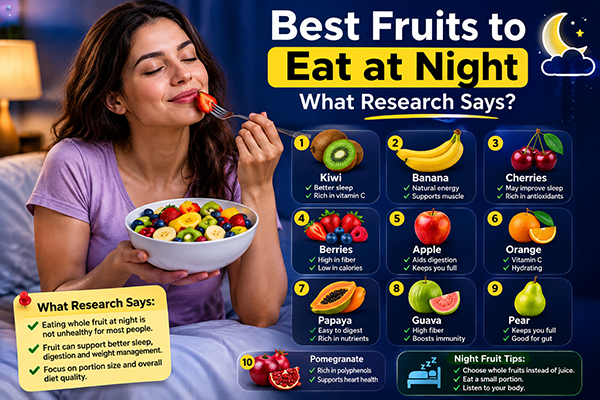
10 Best Fruits to Eat at Night
There isn’t one scientifically proven “best” fruit for bedtime. However, these options can be practical choices depending on your nutritional needs and personal tolerance.
1. Kiwi
Kiwi is a nutrient-dense fruit that provides vitamin C, fiber, and other plant compounds.
It is often discussed in relation to sleep, but it is important not to overstate the evidence. Research investigating fruit and sleep has found associations, but controlled evidence is still limited. A review of studies examining fruit and vegetable consumption and sleep concluded that experimental research remains inconsistent.
Best for: A light evening snack and people looking for a fiber-rich fruit.
2. Banana
Bananas are one of the easiest fruits to include in an evening diet. They provide carbohydrates and potassium and can be particularly convenient after an evening workout.
For people trying to build muscle, a banana can also be combined with a protein-rich food such as Greek yogurt, milk, or cottage cheese to create a more balanced post-workout snack.
Best for: Post-workout nutrition and a convenient evening snack.
3. Cherries
Cherries contain naturally occurring plant compounds and are frequently studied in research involving sleep and dietary patterns.
However, evidence specifically showing that eating ordinary cherries before bed will improve sleep is not strong enough to make a guaranteed claim.
If you enjoy cherries, they can still be a nutritious addition to an evening diet.
Best for: A nutrient-rich evening snack when available.
4. Berries
Strawberries, blueberries, raspberries, and blackberries are relatively low in calories and provide fiber and various polyphenols.
They can be paired with Greek yogurt or cottage cheese to increase the protein content of an evening snack.
Best for: High-fiber snacks and pairing with protein.
5. Apple
An apple is a convenient, portable source of fiber and carbohydrates.
If you’re hungry at night, an apple can be a better choice than many highly processed snacks, especially when you want something filling without a large portion of calories.
Try pairing an apple with a small amount of peanut butter if you need a more satisfying snack.
Best for: Fiber and convenient snacking.
6. Orange
Oranges provide vitamin C, water, and carbohydrates. They can be a refreshing option if you prefer something light after dinner.
Whole oranges are generally preferable to fruit juice when you’re looking for the benefits of the whole fruit because whole fruit retains its fiber and requires chewing.
Best for: A hydrating, refreshing evening snack.
7. Papaya
Papaya is a soft, naturally sweet fruit that provides vitamin C, carotenoids, and fiber.
It can be useful for people who prefer a lighter dessert after dinner instead of cakes, cookies, or other heavily processed foods.
Best for: A light fruit-based dessert.
8. Guava
Guava is particularly interesting from a nutrition perspective because it provides fiber and vitamin C.
Its relatively high fiber content can contribute to overall dietary fiber intake, although eating a large amount immediately before bed may not suit everyone.
Best for: Fiber-rich evening snacks.
9. Pear
Pears provide carbohydrates and fiber and can be eaten alone or combined with yogurt, cottage cheese, or nuts.
Because fiber can contribute to satiety, a pear may be useful when you want an evening snack that feels more substantial.
Best for: A filling, fiber-rich snack.
10. Pomegranate
Pomegranate contains polyphenols and can add variety to an evening meal or snack.
Instead of consuming large amounts of pomegranate juice, consider using the whole arils as part of a balanced snack.
Best for: Adding variety and plant compounds to your diet.
Can Eating Fruit at Night Help You Sleep?
This is where the research needs careful interpretation.
There is evidence of a relationship between overall fruit and vegetable intake and sleep, but that does not prove that eating fruit immediately before bed improves sleep.
A review of 52 human studies found a potential relationship between fruit and vegetable consumption and sleep, but experimental evidence was limited and inconsistent.
More recent systematic reviews examining time-restricted eating and sleep have also produced mixed findings. One 2026 meta-analysis found modest improvements in some sleep measures in certain analyses, but controlled trials did not consistently show improvements in sleep duration or sleep quality.
Therefore, it is better to think about your overall eating pattern and meal timing rather than searching for a magical bedtime fruit.
What Fruit Should You Avoid at Night?
There is no universal list of fruits that everyone needs to avoid after dinner.
However, consider limiting or adjusting:
Large portions
Eating a very large amount of fruit can add substantial carbohydrates and calories, particularly if you are already satisfied after dinner.
Fruit juice
Juice can provide a concentrated amount of sugar without the same structure and fiber as whole fruit. Whole fruit is generally the more useful choice for an everyday snack.
Dried fruit
Raisins, dates, dried mango, and other dried fruits are nutritious but much more calorie-dense by weight than fresh fruit. Portions can become large very quickly.
Fruit that triggers digestive symptoms
Some people experience bloating, reflux, or other symptoms after particular foods. If a certain fruit consistently causes discomfort before bed, there is little reason to force yourself to eat it.
What Is the Best Fruit Combination Before Bed?
If you want a more balanced evening snack, combine fruit with protein or healthy fats.
Some practical combinations include:
- Banana + Greek yogurt
- Apple + peanut butter
- Berries + Greek yogurt
- Pear + cottage cheese
- Kiwi + yogurt
- Orange + a small handful of nuts
- Papaya + Greek yogurt
This approach can be particularly useful for people who exercise in the evening because it combines carbohydrates with a protein source.
Should You Eat Fruit Before or After Dinner?
There is no universal rule saying fruit must be eaten before or after dinner.
You can eat fruit:
- As part of breakfast
- As a mid-morning snack
- Before exercise
- After exercise
- With lunch
- As an evening snack
- As a dessert after dinner
The best timing is usually the one that fits your overall diet, hunger, schedule, and digestive comfort.
If you are hungry at night, choosing a piece of whole fruit can be a practical alternative to highly processed snack foods.
Does Eating Fruit at Night Cause Weight Gain?
Not automatically.
The belief that fruit causes weight gain simply because it is eaten at night is not supported by strong evidence. Research on whole fresh fruit generally suggests that it does not promote excess adiposity and may modestly support weight management when included as part of an appropriate diet.
However, total calorie intake still matters.
For example, eating several large servings of fruit on top of an already calorie-rich diet adds energy. Likewise, fruit-based desserts containing added sugar, cream, or large amounts of nut butter can be substantially higher in calories than a piece of whole fruit.
Frequently Asked Questions
Is banana good to eat at night?
Yes. A banana can be a convenient evening snack and provides carbohydrates and potassium. It can also be paired with yogurt or milk if you want additional protein.
Which fruit is best for sleep?
There is currently no fruit that can confidently be called the universally best fruit for sleep. Kiwi and cherries are often discussed because they have been studied in relation to sleep, but the evidence is not strong enough to guarantee a sleep benefit.
Can I eat fruit after dinner?
Yes. For most people, a serving of whole fruit after dinner can be part of a healthy diet.
Is fruit at night bad for digestion?
Not necessarily. Digestive responses vary between individuals. If eating fruit late causes bloating, reflux, or discomfort, try eating it earlier or choosing a smaller portion.
Is fruit better than dessert at night?
Often, whole fruit can be a more nutrient-dense choice than desserts high in added sugar and saturated fat. However, an occasional traditional dessert can also fit into an overall balanced diet.
Final Verdict: What Is the Best Fruit to Eat at Night?
The best fruit to eat at night is ultimately the one that fits your nutritional needs, tastes good, and doesn’t cause digestive discomfort.
Bananas, kiwi, berries, apples, oranges, papaya, guava, pears, cherries, and pomegranate can all fit into a healthy evening eating pattern.
Most importantly, don’t worry about an arbitrary rule that says fruit becomes unhealthy after a certain hour. Current research does not support treating nighttime whole-fruit consumption as inherently harmful. Instead, focus on your overall diet quality, portion sizes, meal timing, sleep routine, physical activity, and individual health goals.
If your goal is better sleep, remember that eating one particular fruit is unlikely to compensate for an inconsistent sleep schedule or poor sleep habits. Research on sleep consistently emphasizes the importance of regular sleep patterns, while evidence specifically connecting fruit timing with better sleep remains limited.